
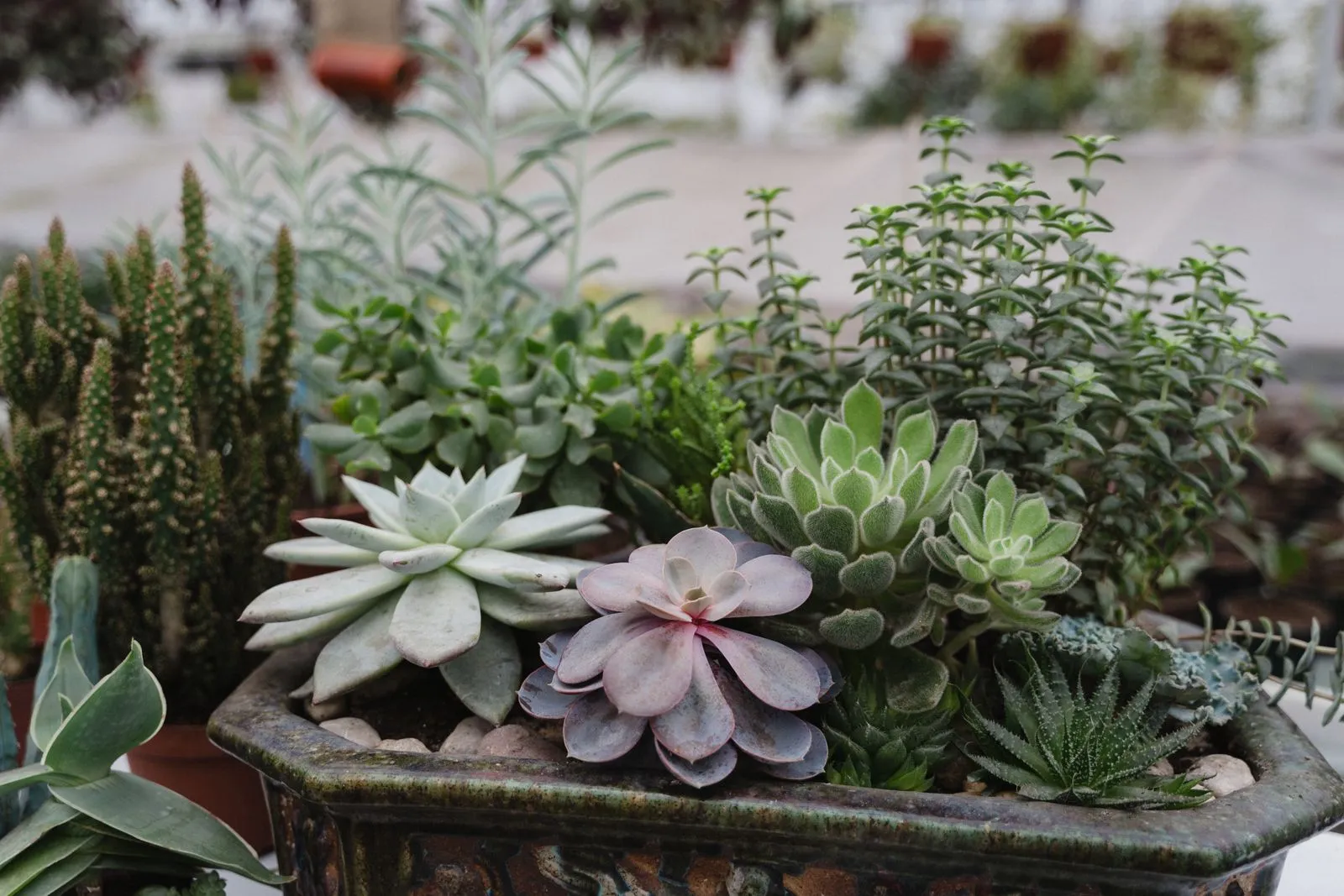
Succulents store water in their leaves and stems, so they usually need less frequent watering than leafy houseplants. But there is no reliable one-size-fits-all schedule: a plant in bright light and a draining pot dries faster than one in a dim spot or a container without drainage. Instead of watering by the calendar, check the soil and your plant’s conditions. These simple habits can help prevent both shriveled leaves and the root rot that comes from staying wet too long.
Check the Soil Before Watering
Wait until the potting mix is dry all the way through before watering again. Test it with a finger or a wooden stick pushed into the soil near the pot’s center. If it comes out damp or has soil clinging to it, wait and check again later. The surface can dry while the deeper mix remains wet, especially in a large pot or a cool room.
When the mix is dry, water thoroughly so moisture reaches the roots, then let the excess drain away. Empty the saucer or outer cachepot rather than leaving the pot sitting in water. Small sips can wet only part of the root ball and make it harder to judge when the plant needs water again.
Match Watering to Light
Succulents in bright light often use water faster because they grow more actively and the potting mix may dry sooner. A plant near a sunny window can need checking more often than the same type in a dim corner. Check the soil regularly, but do not water simply because the plant is in a bright spot; confirm that the mix has dried first.
In lower light, growth and water use often slow down. Soil can stay damp for longer, raising the risk of root problems if you keep a frequent routine. If a succulent is stretching toward a window or losing its compact shape, it may need brighter light, not extra water. Increase light gradually to reduce the chance of sunburn.
Choose a Pot That Drains
A drainage hole lets excess water escape and gives you a clear way to water thoroughly without leaving roots soaked. Use a pot with a hole and a fast-draining mix made for succulents or cacti. A decorative outer pot is fine, but remove the plant’s inner pot for watering or empty any collected water afterward.
A pot without a drainage hole needs extra care because water can collect below the roots even when the surface looks dry. If possible, move the plant to a draining container. If you keep it in a no-hole pot, use a small, measured amount of water and check the soil carefully; this setup is less forgiving, so avoid adding more while any dampness remains.
Adjust for the Season
Many succulents grow more actively during warmer, brighter months and may dry out sooner then. In shorter, cooler days, growth often slows and the soil takes longer to dry. Treat these patterns as a reason to check more or less often, not as fixed seasonal watering dates. Indoor heating, air conditioning, and changing window light can also affect how quickly a pot dries.
Watch the plant as well as the soil. Slightly wrinkled or less firm leaves can signal that a succulent needs water, but soft, translucent, or mushy leaves may point to excess moisture or damage. Check the roots and soil conditions before deciding. When uncertain, wait a few days and reassess rather than watering wet soil.
Water succulents when the potting mix has dried, then adjust how often you check based on light, drainage, and the season. A draining pot and a thorough soak followed by a dry-out period make the routine easier to manage. If you want help choosing a plant or potting mix, visit Arlington Succulent Co. in Arlington.